RESTORATION, PRESERVATION & ARCHIVING
MENU
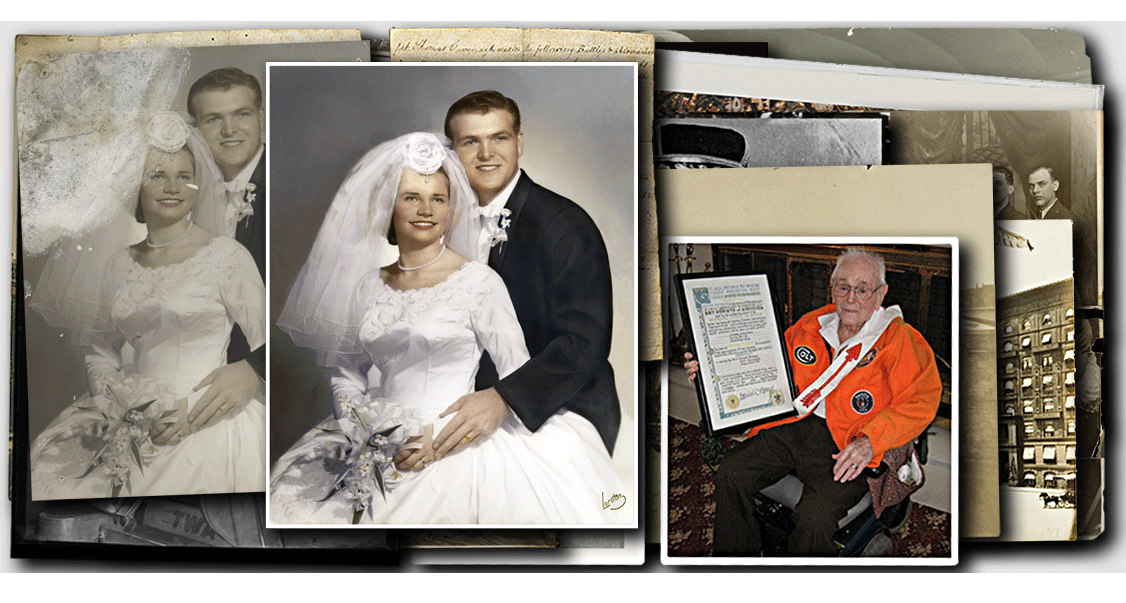
PHOTO RESTORATION
Sebastian Wintermute provides a full range of photo conservation, photo archiving, and photo restoration services dedicated to protecting and bringing new life to photographs that have faded with age or been damaged by stains, tears, fire, water, or other forms of deterioration.
Restoring an old photograph, particularly one of deep personal significance can be an intensely personal and emotional experience. Sebastian understands the memories and feelings these photographs can hold and takes the time to listen carefully to each client, incorporating their wishes, suggestions, and instructions throughout the restoration process. His goal is not simply to repair a damaged photograph, but to preserve the memories, stories, and emotions it represents.
Every restoration project begins with a personal consultation to assess the photograph’s condition and the extent of the damage, discuss the client’s needs and expectations, and determine the techniques, methods, and materials best suited to the project. Each image is then carefully restored with the goal of preserving its character and returning it, as faithfully as possible, to its original appearance.
Several factors are taken into consideration, including the photograph's physical condition, size, and format. Rolled-up photographs may need to be carefully flattened; stains may need to be removed; and creases, tears, and other physical damage may need to be repaired and reinforced. Missing areas are carefully reconstructed, while the requirements for the final reproduction are also considered. Based on these factors, along with the anticipated time required to complete the work, an estimate is provided before the restoration begins.
While discount and offshore photo restoration services often rely heavily on automated Photoshop filters and AI image processing, Sebastian believes there is no substitute for an artist's skill, experience, and attention to detail. Each photograph is carefully retouched by hand to ensure that the restored image remains faithful to the original while preserving as much of its character as possible.
 Throughout the restoration process, clients receive proofs showing the progress of the work. Maintaining an open and informed dialogue helps ensure that the restoration reflects the client's wishes and results in a finished image they are truly satisfied with. Once the damage has been repaired and the restored image has received the client's approval, a test print is produced to determine the appropriate printing settings and identify any areas that may require additional attention. Once the test print is approved, the final print is produced and trimmed according to the client's specifications.
A restoration should be more than a temporary fix. The quality of the final print is essential to the long-term preservation of a restored photograph or document, and Sebastian believes that only supplies and materials designed to last for generations should be used for this important final step.
All restored photographs are printed using fine-art, natural-fiber, acid-free papers and specially formulated archival inks. According to the manufacturers' specifications, these materials are designed to produce prints that can last well over 150 years without significant fading when displayed under normal conditions, and more than 250 years when stored in a properly controlled environment.
PHOTO PRESERVATION & CONSERVATION
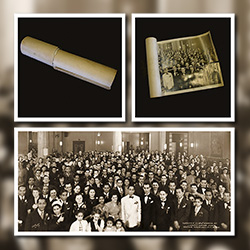 Many of the photographs brought in for restoration have suffered extensive damage as a result of improper display, mishandling, or accidents such as basement flooding and house fires. In such cases, an initial preservation and conservation treatment may be necessary to stabilize the photographs and protect them from further damage and deterioration.
Panoramic photographs that have been rolled and stored that way for many years, as well as photographs damaged by high humidity or basement flooding, may require humidification and flattening. To prevent the photographic emulsion from cracking and avoid causing additional tears, the photographs are carefully placed in a controlled humidification chamber. Moisture is slowly reintroduced into the layers of the photograph, making the material sufficiently pliable to be safely flattened and dried.
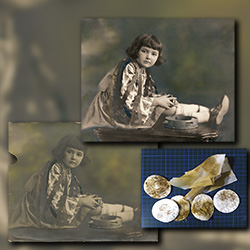 Photographs that have been displayed for many years may become covered with a thick layer of dust, soot, and cigarette smoke residue, causing them to lose much of their original color and vibrancy. The surfaces must be carefully cleaned using specialized solutions, with great care taken to ensure that the photographic emulsion remains intact and undamaged.
Other photographs may have fallen victim to children's mischievous hands, being torn into pieces or covered with crayons and markers. In addition to cleaning, torn photographs and those with missing areas require careful mending, reassembly, and reconstruction of the missing sections. Only after these physical treatments have been completed can the photographs be safely scanned and digitally retouched, allowing the image to be restored as faithfully as possible to its original appearance.
PHOTO SCANNING & DIGITAL ARCHIVING
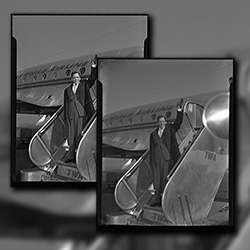 Producing a high-quality scan is one of the most important steps in the photo restoration process. The quality of the scan directly affects the quality of the final result. While discount photo restoration services may rely on low-quality scanners or ask clients to scan their own photographs, assuming that imperfections and other problems can later be corrected with Photoshop or online AI services, Sebastian Wintermute uses professional equipment and specialized software to ensure that every scan captures even the smallest details and subtle variations in color essential to high-quality photo restoration and fine-art reproduction.
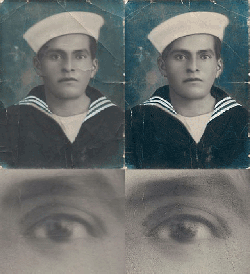 Before scanning, each photograph is carefully cleaned to remove surface dust and residue. Photographs intended for reproduction at their original size are scanned at a resolution of at least 1200 dpi. Higher resolutions are used when an image needs to be enlarged or when capturing extremely fine details is essential, such as for fine-art reproduction,publication, or long-term digital archiving.
Sebastian believes there is no substitute for an artist's trained eye and meticulous attention to detail. He avoids automated "dust and scratch" filters, which can inadvertently remove small but important details and contribute to an overall loss of image quality. Instead, each image is carefully retouched by hand, helping to preserve its original detail, clarity, and character while avoiding the loss of quality that can result from shortcuts and excessive reliance on automated image-processing tools.
 Images intended for digital archiving receive additional scrutiny to ensure that important details are not lost, altered, or misinterpreted during the restoration and retouching process. Once the restored image has been carefully examined and approved by the client, archival files are saved at the highest practical resolution in lossless digital formats.
For long-term preservation and delivery, specialized archival storage media may also be used, including archival-grade DVDs designed for long-term storage when properly maintained. This provides clients with a durable physical copy of their restored images that can serve as an additional safeguard for their digital archive. properly stored. This provides clients with a durable physical copy of their restored images for long-term digital preservation.
|
|||||||||
| © 2026 Preserve Your Past | |||||||||
| By accessing this website you signify that you read, understood, and agreed to be bound by Terms of Services. If you do not agree to these terms, you are not permitted to use the Services. These Terms of Services have the same force and effect as an agreement in writing. |
|||||||||


