RESTORATION, PRESERVATION & ARCHIVING
MENU
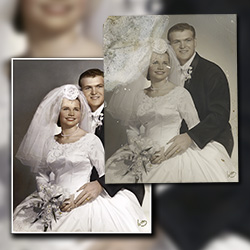
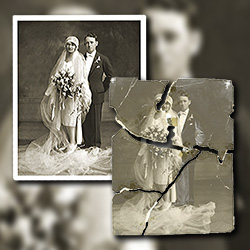
Restoration of a Water-Damaged Vintage Wedding Photograph
Many priceless family photographs, captured during once-in-a-lifetime moments such as weddings, bar mitzvahs, baptisms, anniversaries, and family reunions, eventually find their way into basements, attics, closets, or old cardboard boxes, where they may remain undisturbed for decades. Hidden away from view, these photographs are often forgotten until a burst pipe, leaking roof, flood, or gradual accumulation of moisture reveals just how vulnerable they can be.
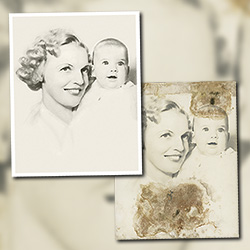 Water is one of the most destructive threats to photographs and other family heirlooms. Moisture can cause photographic papers to swell, curl, warp, stain, and discolor. Prolonged exposure to damp conditions may also encourage the growth of mold and mildew, further damaging the image and creating additional conservation challenges. Once a photograph has been affected by severe water damage, simply allowing it to dry is rarely enough to restore its original appearance.
For many families, however, these photographs represent far more than paper and photographic emulsion. They are tangible connections to people and places that may no longer exist. They preserve the faces of parents and grandparents, the clothing and hairstyles of another era, and the fleeting moments that helped shape a family's story.
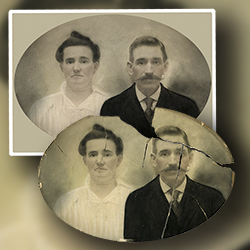
A vintage wedding photograph can be especially meaningful. Long before the age of smartphones and digital cameras, a wedding portrait might have been one of the few professionally made photographs documenting an important family milestone. The people pictured in the image may have been married for decades, and the photograph itself may have become an important family artifact passed from one generation to the next. When water damage, staining, mold, or mildew begins to obscure such an image, it can feel as though a piece of that history is disappearing. Unfortunately, there is no simple remedy for photographs that have suffered extensive deterioration. Physical restoration can be difficult, time-consuming, and, depending on the condition of the original, sometimes impossible.
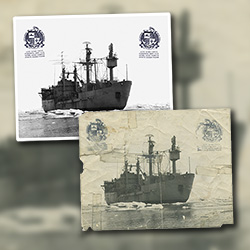
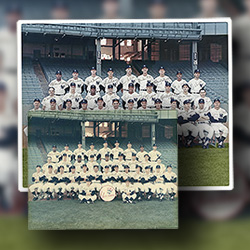
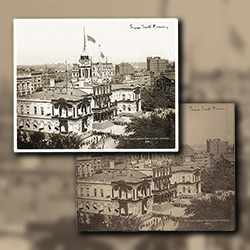
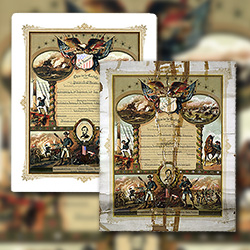
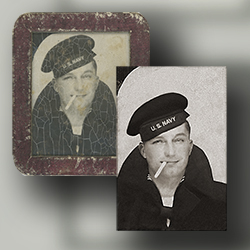
Yet even severely damaged photographs may not be beyond saving. A skilled photo restoration professional can often recover a remarkable amount of visual information from a damaged original. The restoration process begins with careful examination of the photograph and an assessment of the type and extent of damage. Whenever possible, the original image is handled as little as necessary and carefully digitized at high resolution, creating a detailed digital master that can be preserved and worked on without repeatedly exposing the fragile original to further handling.
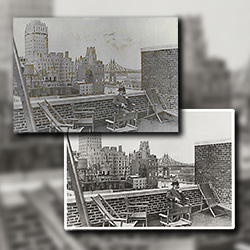
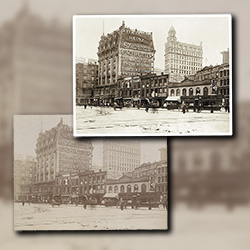
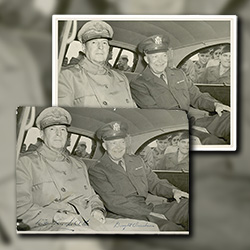
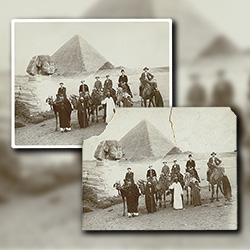
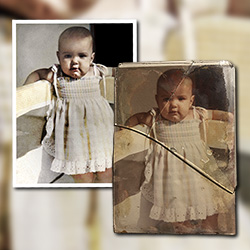
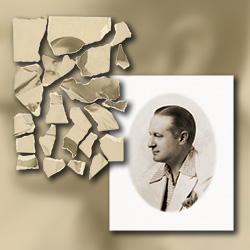
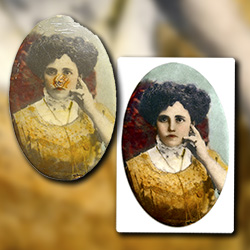
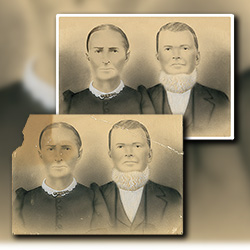
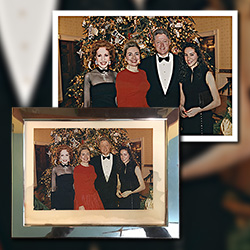 Digital restoration allows the damaged photograph to be carefully reconstructed while preserving as much of the original image as possible. Stains and discoloration can be reduced, areas affected by water damage can be retouched, and missing or obscured details may be reconstructed based on surviving visual information elsewhere in the photograph. Tears, scratches, cracks, and other physical defects can also be addressed when necessary.
The goal is not to create a new photograph, but to restore the appearance and visual character of the original as faithfully as possible. In some cases, the physical photograph may be too fragile or deteriorated for conventional restoration. Even then, digital restoration can offer an important alternative. A high-resolution digital copy can serve as the foundation for carefully rebuilding damaged portions of the image, creating a faithful restored replica while allowing the original artifact to remain safely preserved.
Once the restoration is complete, the photograph can be archived in a high-resolution digital format and reproduced for family members. A restored print can be framed and displayed, while digital copies can be shared with children and grandchildren, incorporated into family histories, or preserved as part of a larger family archive.
Today, restored photographs can also be displayed in digital frames or shared privately with relatives across generations and around the world. A photograph that once sat forgotten in a damp basement or deteriorating box can once again become part of everyday family life.
Most importantly, restoration gives families the opportunity to reconnect with the people and stories represented in these irreplaceable images. A vintage wedding photograph is not simply a record of a ceremony that took place many years ago. It is a visual link to the beginning of a marriage, to the people who gathered to celebrate it, and to the generations that followed.
By restoring and preserving these fragile photographs, we help ensure that the memories they contain are not lost to water, time, or neglect. The restored image can continue to tell its story, allowing future generations to see the faces of those who came before them, and to carry their family's history forward into the future.
|
|
|
|

|
|
|
|
|
|
|
|
|
|
|
|
|
|
|
|
|
|
|
|
|
|
|
|
|
|
|
|
|
|
|
|
|
|
|
|
|
|
|
|
|