RESTORATION, PRESERVATION & ARCHIVING
MENU
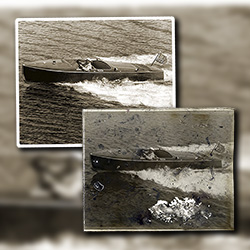
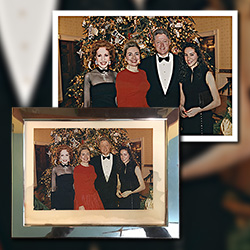
Restoration of a Photograph Stuck to Glass After Water Damage
Water damage is one of the most destructive threats to photographs. Whether caused by a burst pipe, a flood, a roof leak, excessive humidity, or an accidental spill, water can quickly affect both the physical structure and the photographic image. When a photograph is framed directly against glass, the consequences can be particularly severe.
As moisture enters the frame, the photographic emulsion, the delicate image-bearing layer on the surface of many traditional photographic prints, can soften and become vulnerable to physical damage. Under conditions of high humidity or direct exposure to water, the softened emulsion may come into contact with the glass and, as the photograph dries, become firmly adhered to its surface. The photograph may then appear to be permanently "glued" to the glass, even though the adhesion may have resulted from the interaction between moisture, the photographic binder, and the glass surface.
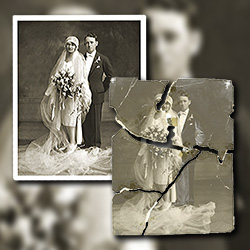
The problem can become even more serious when the damaged frame is later handled improperly. If the glass breaks, or someone attempts to peel the photograph away from it by force, portions of the image may tear away with the glass. In severe cases, areas of the photographic emulsion can be lost entirely, taking irreplaceable details of the original image with them.
This type of damage is especially heartbreaking when the photograph is a one-of-a-kind family treasure, a wedding portrait, a photograph of a parent with a child, or a visual record of a person or moment that can never be recreated. A burst plumbing or sewage pipe does not discriminate between ordinary household objects and irreplaceable family heirlooms. Dirty water can damage wedding photographs, childhood portraits, military photographs, historic documents, and treasured souvenirs of once-in-a-lifetime events in a matter of minutes.
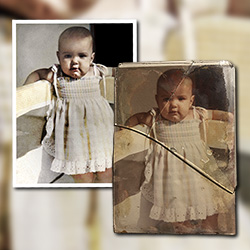 When contaminated water enters a picture frame, it can become trapped between the photograph and the glass. The moisture may cause staining and discoloration, while the high humidity and prolonged contact with water can affect the photographic emulsion. As the photograph dries, the image surface may adhere tightly to the glass.
The exact nature of the damage depends on many factors, including the type of photographic process used to create the print, the length of time it remained wet, the temperature and humidity, and the condition of the photograph before the accident. Photographs are not all made from the same materials, and different photographic processes can respond very differently to moisture and wet handling. The Library of Congress notes that photographs stuck to glass can be extremely difficult, and sometimes impossible, to remove without causing serious damage.
The internet contains many suggestions for separating photographs from glass, including methods involving heat, water, or other forms of intervention. Unfortunately, there is no universal technique that is safe for every photographic print. The Smithsonian Institute Archive specifically cautions against putting valuable photographs into a microwave and recommends consulting a photograph conservator who can first determine the photographic process and assess the extent of the damage. The institution also explains that water can be disastrous for certain types of photographs, potentially causing gelatin binders to soften or dissolve and making the image surface extremely vulnerable during handling.
For this reason, a valuable or irreplaceable photograph that has become stuck to glass should not be treated as an ordinary household object. Attempting to force the photograph away from the glass can cause considerably more damage than the original water exposure.
In some circumstances, the safest first step may be to document the photograph exactly as it is, without attempting to separate it. The Smithsonian Institution Archives recommends creating a high-resolution copy through the glass before undertaking any intervention. This can provide an important digital record of the image and may make it possible to reconstruct or reproduce the photograph even if physical separation proves impossible.
The first stage of a professional restoration is careful examination and assessment. Before any treatment is attempted, the photograph should be evaluated to determine what type of photographic process was used, how severely the image has been affected, and whether the photograph can realistically be separated from the glass without causing additional loss.
The condition of the photographic emulsion is particularly important. Many photographic prints contain a gelatin-based binder that holds the image-forming material. Under high humidity, gelatin can become soft and tacky, making the surface especially susceptible to abrasion, scratching, and adhesion. The Library of Congress explains that high relative humidity can soften gelatin binders and make photographic materials more vulnerable to mechanical damage.
The conservator or restoration specialist must therefore consider not only the visible staining and damage but also the physical stability of the photograph itself. In some cases, the photograph can be carefully separated from the glass with limited image loss. In others, attempting to remove it would destroy more of the original than it would save. Each photograph must be evaluated individually, and the treatment approach should be determined by the condition and significance of the object.
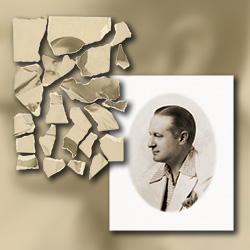
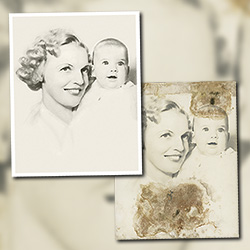 Unfortunately, not every photograph stuck to glass can be safely removed. When the photographic emulsion has become firmly adhered to the glass, physical separation may result in substantial loss of the image. Even a seemingly successful removal may leave behind areas of missing emulsion, scratches, abrasions, staining, or distortion. When physical recovery is not possible, or when attempting to remove the photograph would put too much of the original image at risk, digital restoration can provide an alternative method of preservation.
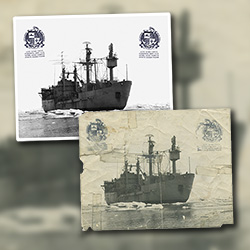
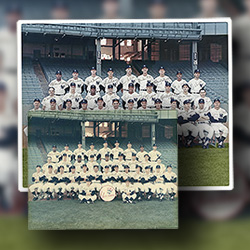
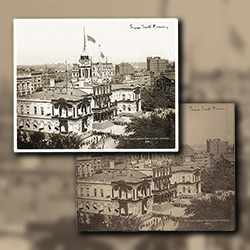
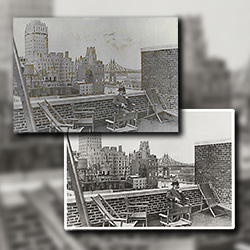
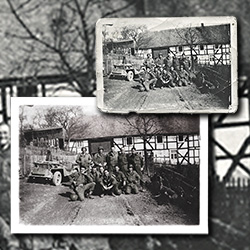
The photograph can sometimes be photographed or scanned at high resolution while it remains attached to the glass. The resulting digital file can then serve as the foundation for extensive digital restoration. Missing portions of the image may be reconstructed using surviving visual information, while stains, scratches, tears, and other forms of damage can be carefully retouched. The goal is not to erase the history of the damaged photograph, but to recover and preserve the visual information that remains.
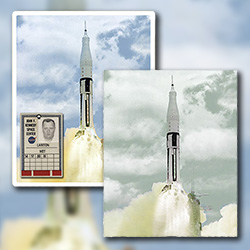
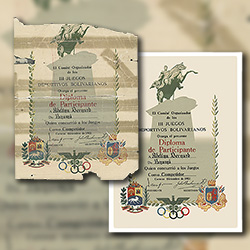
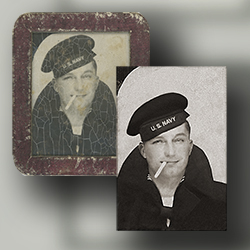
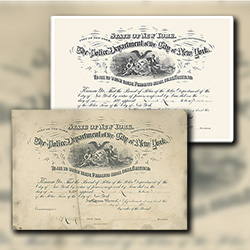
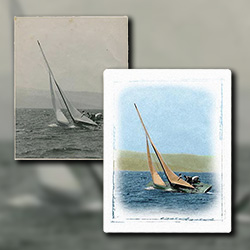
Once a high-resolution digital capture has been created, the restoration process can begin. Depending on the condition of the original, digital restoration may involve correcting uneven exposure, reducing discoloration, removing stains, reconstructing damaged areas, repairing scratches and tears, and carefully restoring missing details. In cases where sections of the image have been lost entirely, the restoration may require detailed reconstruction based on surrounding visual information and, when available, reference photographs.
Digital restoration is particularly valuable because it allows the original damaged object to remain undisturbed while creating a new, stable representation of the photograph. After restoration is completed, the recovered image can be reproduced as a high-quality archival print. This creates an opportunity to preserve the photograph in a form that can be displayed and enjoyed without repeatedly handling the fragile original. The original photograph, even if still attached to the glass, can then be retained as an important historical artifact, while the restored reproduction becomes the accessible version of the family memory.
This type of damage also demonstrates why proper framing is an important part of photographic preservation. Photographs should not normally be placed directly against ordinary frame glass. A properly designed archival mat or spacer can create a physical separation between the photograph and the glazing, reducing the likelihood of direct contact and providing additional protection.
The Library of Congress recommends using acid-free rag or museum board for matting and emphasizes the importance of appropriate housing and framing for photographic materials. A stable environment is equally important. Photographs should be protected from excessive humidity, temperature fluctuations, direct sunlight, and sources of water. High humidity can soften photographic binders and increase the risk of physical damage, while elevated temperature and humidity can accelerate deterioration.
A photograph damaged by water may appear to be beyond saving, especially when its image surface has become permanently adhered to glass. Yet physical damage does not necessarily mean that the memory contained within the photograph is lost forever. With careful examination, appropriate conservation techniques, high-resolution imaging, and skilled digital restoration, it may be possible to recover much, or sometimes even most, of the visual information contained in a severely damaged photograph.
The most important principle is to avoid making the damage worse. A valuable photograph should never be treated as a disposable object simply because it has been damaged by water. Before attempting to peel, scrape, soak, heat, or otherwise intervene, the photograph should be evaluated by someone with appropriate experience in photographic materials and conservation. Sometimes the best restoration is the careful physical recovery of the original photograph. In other cases, the most responsible solution is to preserve the original in its damaged state, create a high-resolution digital record, and restore the image digitally for archival reproduction. Either way, the objective remains the same: to preserve as much of the original photograph and its visual history as possible, ensuring that a precious family memory can survive the damage and remain available for future generations.
|
|
|
|

|

|
|
|
|
|
|
|
|
|
|
|
|
|
|
|
|
|
|
|
|
|
|
|
|
|

|
|
|
|
|
|
|
|
|
|
|
|
|
|

|
|
|||||||||
| © 2026 Preserve Your Past | |||||||||
| By accessing this website you signify that you read, understood, and agreed to be bound by Terms of Services. If you do not agree to these terms, you are not permitted to use the Services. These Terms of Services have the same force and effect as an agreement in writing. |
|||||||||


