RESTORATION, PRESERVATION & ARCHIVING
MENU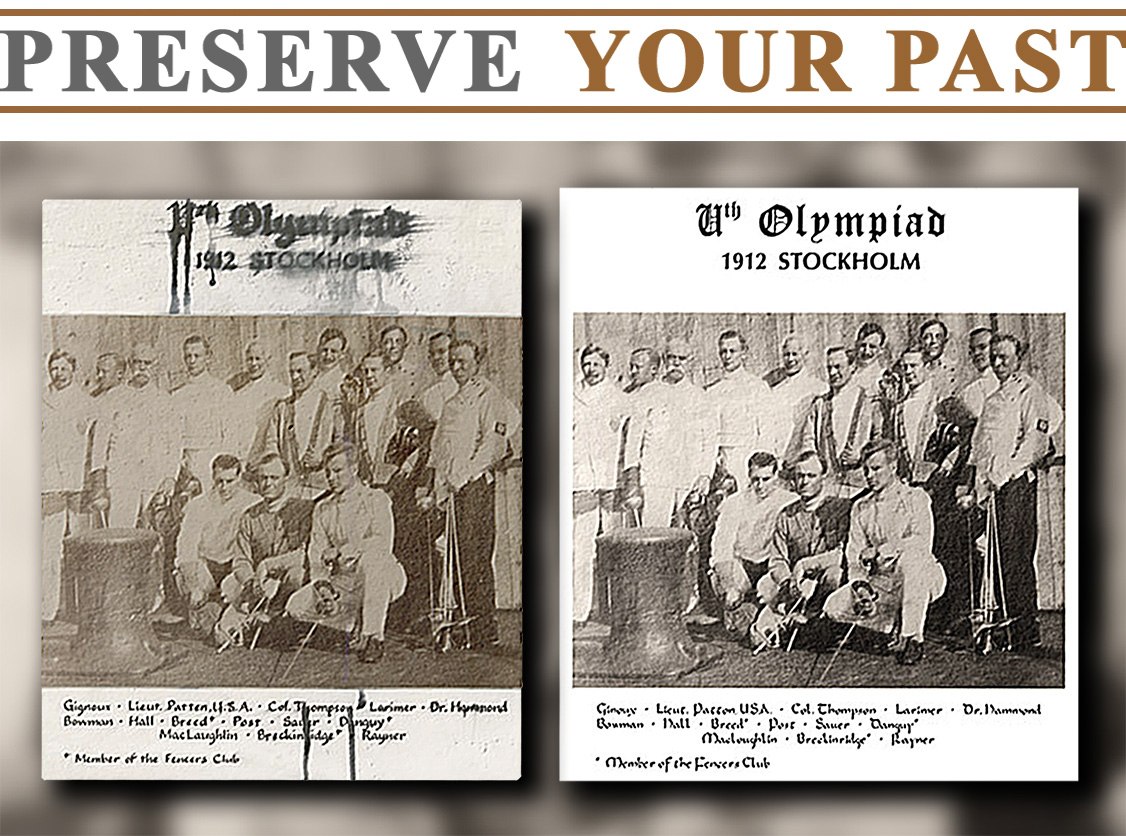
Restoring a Forgotten Olympic Photograph:
How a 1912 Image Revealed the Young George S. Patton
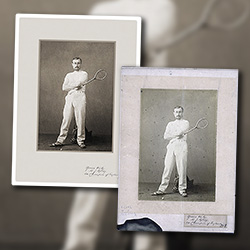
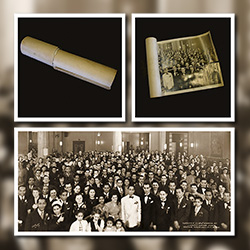
One such project involved the restoration of a faded, water-damaged, ink-stained photograph of a group of fencers at the 1912 Olympic Games. The restoration was commissioned by the renowned New York Fencers Club.
The 1912 Stockholm Olympic Games were intended to strengthen the bonds of friendship and cooperation among the participating nations. Instead, they became the last Olympic Games held before the world was plunged into the horrors of the First World War, a conflict that claimed millions of young lives and brought immeasurable suffering to hundreds of millions more.
 The hero of the Stockholm Games was Jim Thorpe (Jacobus Franciscus "Jim" Thorpe), a member of the Sac and Fox Nation. Thorpe became the first Native American to win Olympic gold medals for the United States. Despite having his athletic shoes stolen shortly before the competition, he won both the pentathlon and the decathlon, events widely regarded as two of the most demanding in athletics. In recognition of his extraordinary achievements, King Gustav V of Sweden presented him with the challenge prize for the decathlon, while Tsar Nicholas II of Russia awarded him the challenge prize for the pentathlon.
 Another athlete who competed in the 1912 Olympic Games was a young fencer identified in the photograph simply as "Lieutenant Patten, USA." An ordinary photo retouching artist, concerned primarily with making a photograph look attractive, might never have questioned the caption. A restoration expert, however, immediately noticed something peculiar about the name.
A quick investigation confirmed the suspicion: the mysterious "Lieutenant Patten, USA" was, in fact, the future General George S. Patton Jr., one of the most celebrated American military commanders of the Second World War. AsThe New York Times later wrote, he "was one of the most brilliant soldiers in American history. Audacious, unorthodox and inspiring, he led his troops to great victories in North Africa, Sicily and on the Western Front." German generals reportedly regarded Patton as the American commander they feared most.
 In 1912, however, George Smith Patton Jr. was still relatively unknown, a young lieutenant, his name misspelled and his image preserved
second from the left in the back row
of a faded, nearly forgotten photograph.
In 1912, however, George Smith Patton Jr. was still relatively unknown, a young lieutenant, his name misspelled and his image preserved
second from the left in the back row
of a faded, nearly forgotten photograph.
Two of the other fencers pictured were members of the New York Fencers Club. Founded in 1883, the Club is the oldest continuously operating organization in the Western Hemisphere dedicated exclusively to the teaching and promotion of fencing. Throughout its distinguished history, the Club has trained dozens of Olympians, many of whom have gone on to win Olympic medals and national championships.
The next time you decide to have an old photograph restored, don't entrust it to someone who simply promises a low price and a fast turnaround. Instead, place it in the hands of an artist who will devote every skill, every ounce of knowledge, and every bit of talent to preserving not only an image, but also a moment of history captured on a single piece of photographic paper.
|
|
|
|

|
|
|
|
|
|
|
|
|
|
|
|
|
|
|
|
|
|

|
|
|
|

|
|
|
|

|
|
|
|
|
|
|
|
|
|
|
|
|
|
|
|
|||||||||
| © 2026 Preserve Your Past | |||||||||
| By accessing this website you signify that you read, understood, and agreed to be bound by Terms of Services. If you do not agree to these terms, you are not permitted to use the Services. These Terms of Services have the same force and effect as an agreement in writing. |
|||||||||


