RESTORATION, PRESERVATION & ARCHIVING
MENU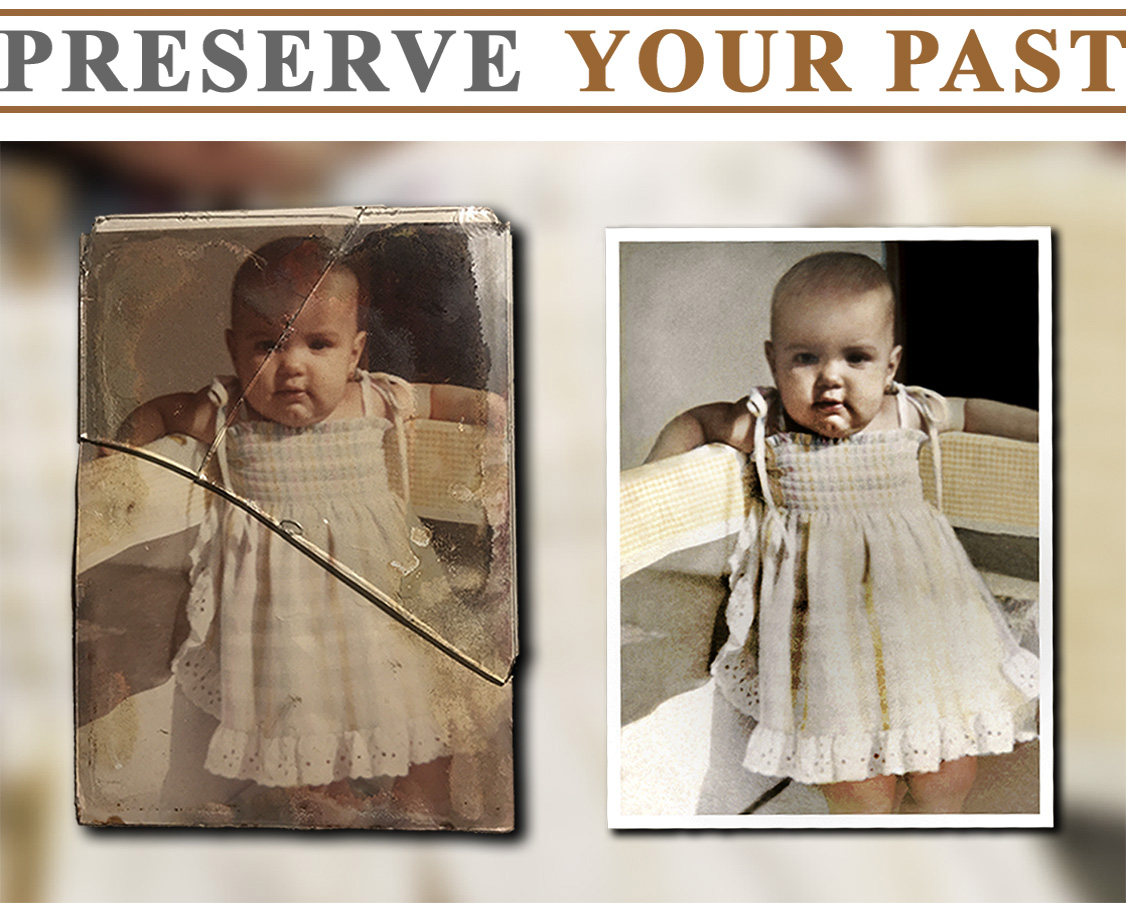
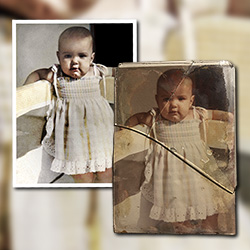
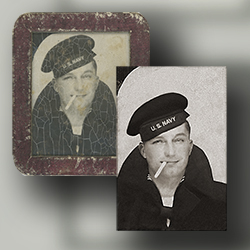
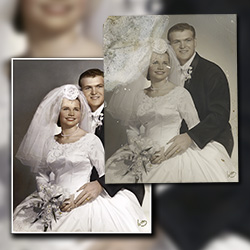
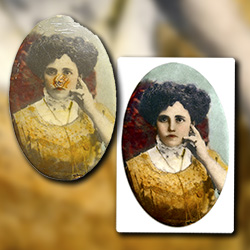
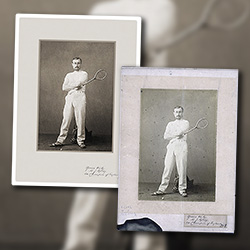
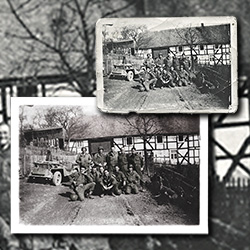
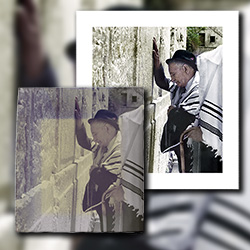
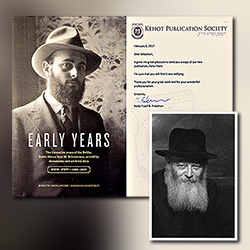
Restoration of a Photograph Stuck to BROKEN Glass
Many treasured family photographs spend decades displayed on walls, resting inside old frames, or carefully stored away with the hope that they will be preserved forever. Yet even a photograph that has been carefully cherished by a family can suffer serious damage when it is not properly framed, protected, or stored.
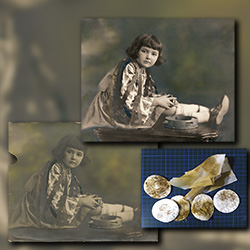
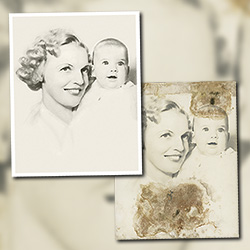
Exposure to high humidity, water leaks, flooding, and other sources of moisture can cause devastating deterioration. In some cases, moisture penetrates the frame and causes the delicate photographic image surface, or emulsion, to adhere to the glass covering the photograph. Once this happens, the photograph may become partially or completely stuck to the glass, making even the simplest attempt at removal potentially destructive.
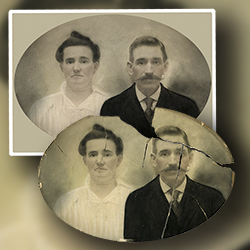
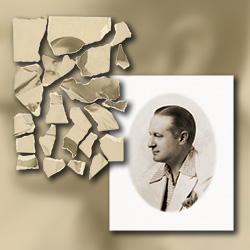
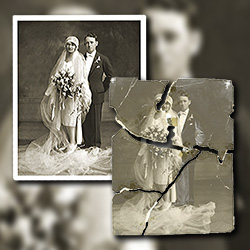
The situation can become even more heartbreaking when the glass itself breaks. A well-meaning but hurried attempt to remove the photograph from the frame can cause the fragile photographic surface to tear, separate, or remain attached to the glass in pieces. In a matter of moments, a cherished family portrait, perhaps the only surviving photograph of a grandparent, a wedding, or a childhood memory, can lose irreplaceable details.
For families discovering this kind of damage, the experience can be devastating. The faces of loved ones may appear distorted or partially missing, while tears, losses, and fragments of photographic emulsion can make the image seem beyond repair. Many people understandably fear that the memories preserved within the photograph have been lost forever. Fortunately, photographs damaged by water and stuck to glass are not always beyond saving.
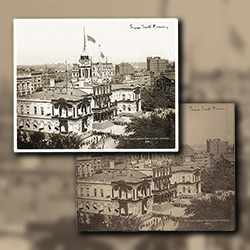
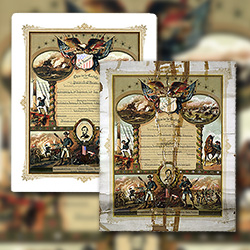
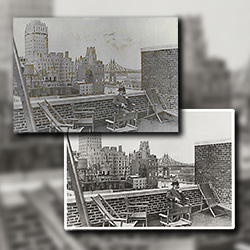
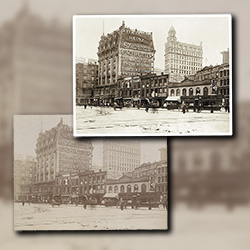
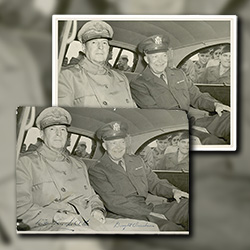
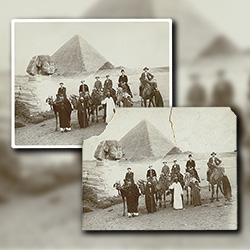
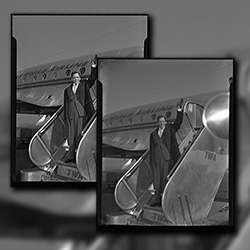
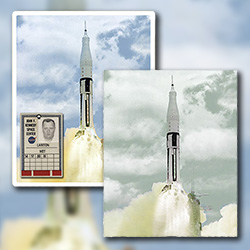
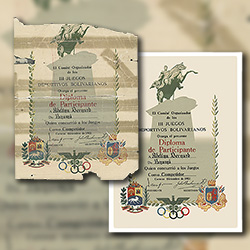
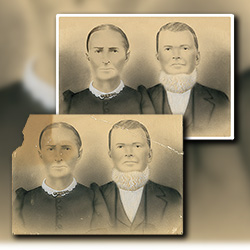
When handled by an experienced photo restoration professional, even severely damaged photographs may be carefully stabilized and digitally restored. The process begins with a detailed examination of the original photograph and the nature of the damage. Depending on the condition of the image, restoration may involve high-resolution scanning or specialized photographic documentation, followed by painstaking digital reconstruction of areas that have been torn, abraded, or lost.
Every damaged photograph presents its own challenges. Details obscured by water staining may need to be carefully reconstructed. Missing portions of faces, clothing, backgrounds, or architectural elements may require extensive digital retouching based on the surviving information within the photograph. The goal is not to create a new image, but to preserve and restore the visual information that remains while carefully reconstructing areas that have been damaged or lost.
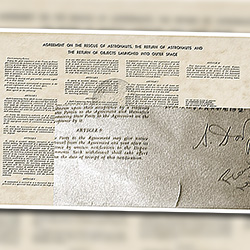
Extreme caution is essential when dealing with photographs adhered to glass. The Smithsonian Institute Archive warns against improvised methods of separating photographs from glass and emphasizes the importance of appropriate collections-care practices. Popular suggestions found online, including attempts to use household appliances or extreme temperature changes, can place fragile photographic materials at considerable risk and may result in irreversible damage.
For this reason, a photograph that has become stuck to glass should not be forcibly peeled, scraped, soaked, heated, frozen, or otherwise manipulated without professional guidance. The photographic emulsion can be exceptionally fragile, particularly after exposure to moisture and subsequent drying. An intervention intended to save the photograph can sometimes cause more damage than the original accident.
Professional photo restoration offers a safer path forward. By combining conservation awareness, advanced digital imaging, and meticulous retouching, a severely damaged family photograph can sometimes be brought back to a condition in which its story can once again be seen and appreciated.
The restoration process may require extraordinary patience and countless hours of careful work. Yet the reward can be immeasurable. A photograph once trapped beneath broken glass and damaged by water may still hold the familiar faces, expressions, clothing, and surroundings that connect one generation to another. Restoring such an image is therefore about far more than repairing scratches, tears, stains, or missing areas, it is about preserving a family's visual history.
In many cases, the photograph itself may be irreplaceable. There may be no second copy, no original negative, and no other surviving image of the people pictured. When a damaged photograph can be successfully restored, the result gives a family the opportunity to reconnect with a moment that might otherwise have disappeared forever.
Through professional photo restoration and careful preservation, photographs damaged by flooding, humidity, broken glass, and years of neglect can sometimes be given a new life. In restoring these fragile images, we preserve not only photographs, but also the memories, emotions, identities, and family histories they carry within them.
|
|
|
|

|
|
|
|
|
|
|
|
|
|
|
|
|
|
|
|
|
|
|
|
|
|
|
|
|
|
|
|
|
|
|
|
|
|
|
|
|
|
|
|

|
|
|||||||||
| © 2026 Preserve Your Past | |||||||||
| By accessing this website you signify that you read, understood, and agreed to be bound by Terms of Services. If you do not agree to these terms, you are not permitted to use the Services. These Terms of Services have the same force and effect as an agreement in writing. |
|||||||||


