RESTORATION, PRESERVATION & ARCHIVING
MENU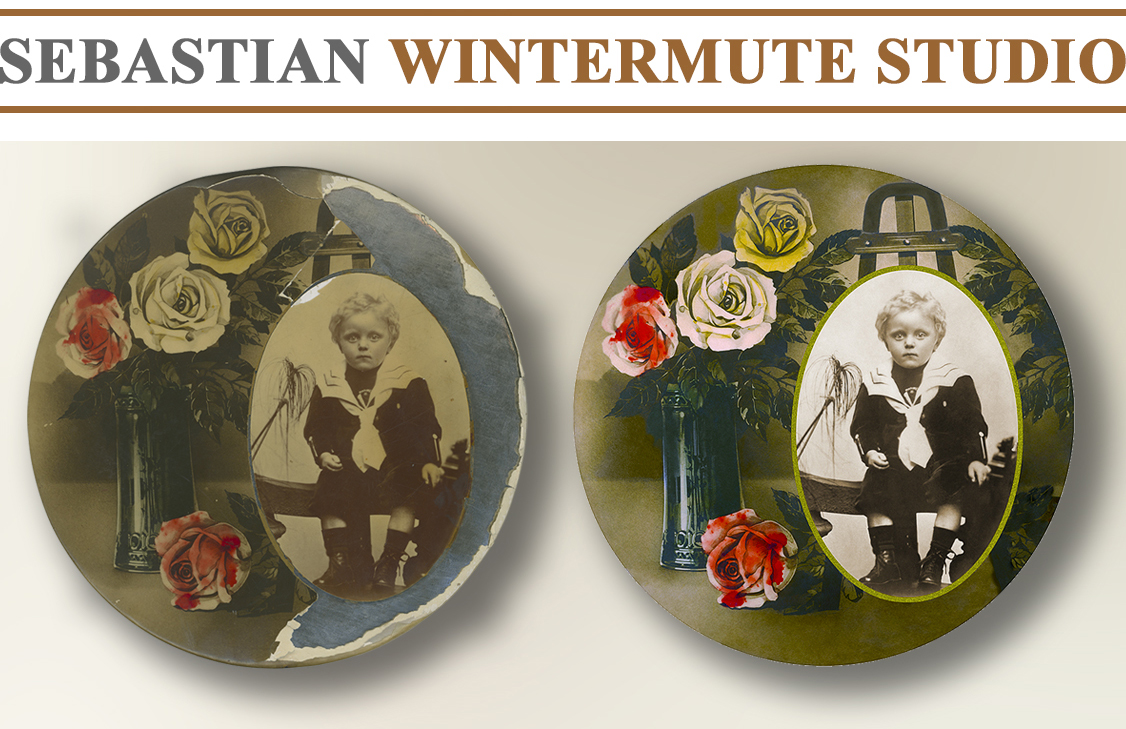
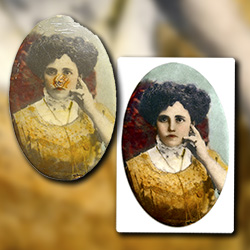
RESTORATION OF A VINTAGE PHOTO MEDALLION
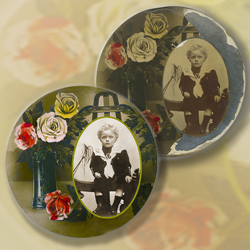
Photo buttons, plaques, and medallions were popular ways of displaying treasured photographic portraits during the late 19th and early 20th centuries. Many were produced by commercial portrait businesses, while others were made as personalized keepsakes for families and individuals by numerous department store photo studios. These unusual photographic objects combined a printed or photographic image with a three-dimensional support, often creating a distinctive and highly decorative alternative to a conventional framed photograph. Some photo medallions were constructed by gluing a photograph to a piece of card stock, adding shredded newspaper as a backing material, and then stretching the assembly over a large metal medallion. The finished object could then be coated with shellac or lacquer, depending on the period and manufacturing process. While this treatment initially helped protect the photograph, it could also contribute to future deterioration as the different materials aged and responded differently to changes in temperature and humidity.
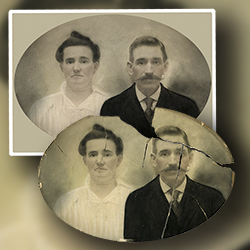
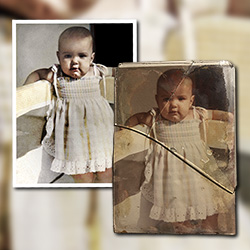
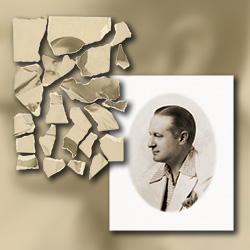
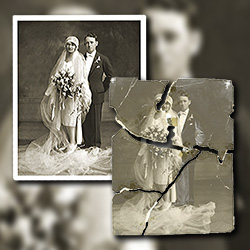
The larger medallions were often displayed prominently in the home, where they became part of the family's collection of cherished photographs and heirlooms. Over decades, however, exposure to sunlight, fluctuations in temperature and humidity, and the natural aging of the photographic and structural materials could take a serious toll. Cracks might develop across the image surface, layers could separate from one another, and fragile sections of the photograph could lift, detach, or break away entirely.
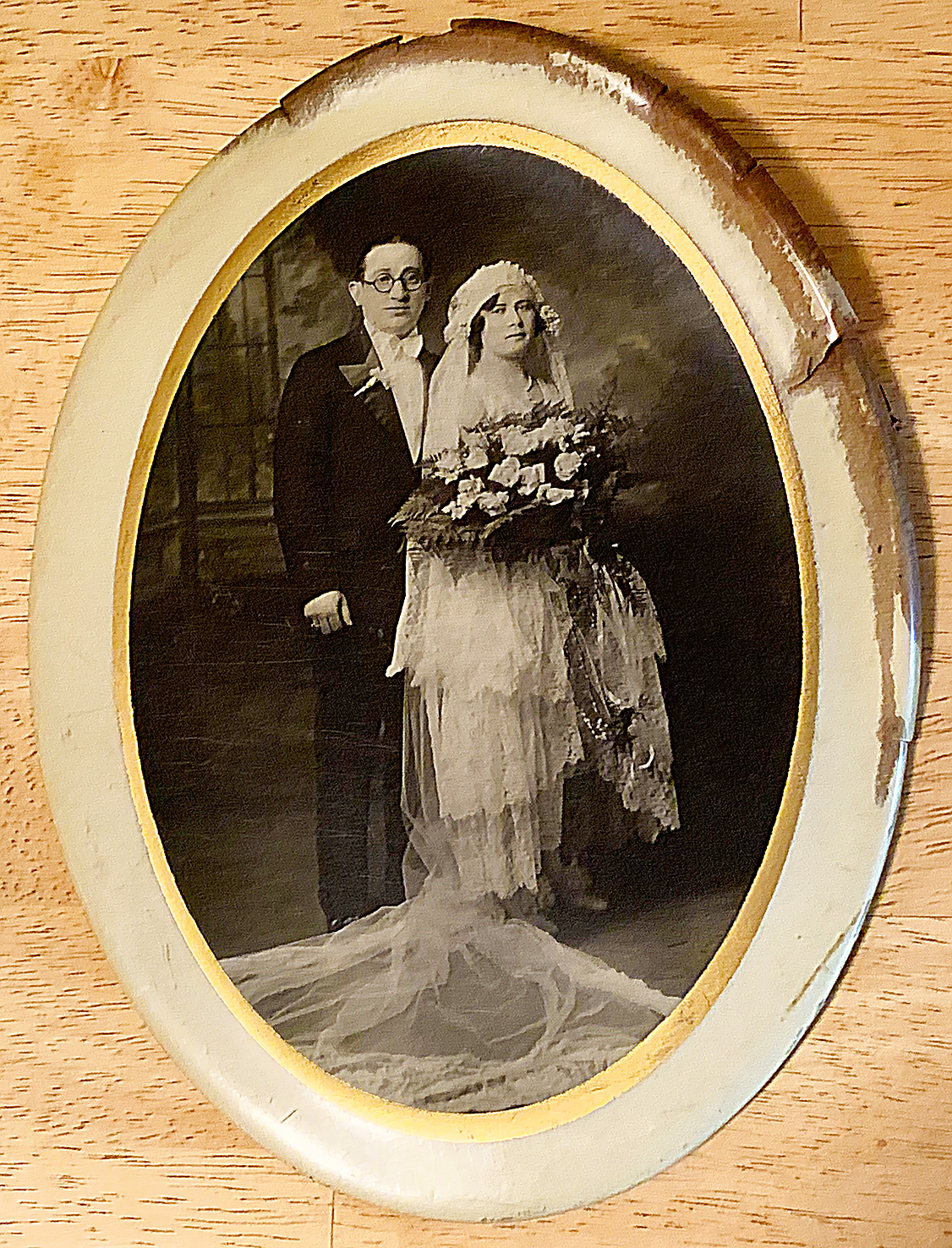 Restoring a damaged photo medallion is particularly challenging because it is not simply a matter of repairing a photograph. The conservator or restoration artist must consider the condition of the image itself as well as the interaction between the photograph, its backing, the three-dimensional support, and any protective coating. These materials may expand, contract, or deteriorate at different rates, creating internal stresses that can cause previously repaired areas to fail.
Unfortunately, many attempts to repair severely damaged photo medallions can result in further deterioration. Depending on the materials involved, restoration may require carefully controlled methods to relax or stabilize distorted components, along with appropriate conservation-grade adhesives to reattach detached fragments. The choice of materials and techniques is critical. A repair that appears successful at first may not remain stable over time if the underlying causes of deterioration have not been addressed.
Yet, in certain cases, following even the best efforts, the deterioration eventually returns. New cracks appeared, previously repaired areas became unstable, and the photograph once again began to fall apart. These experiences demonstrated just how difficult it can be to achieve a lasting repair when an object is composed of multiple aging materials that respond differently to environmental conditions.
Even for an experienced conservation and restoration artist, repairing a severely damaged photo medallion is an extremely challenging undertaking that requires a thorough understanding of photographic materials, adhesives, coatings, and restoration techniques. Each object presents its own unique set of problems, and the restoration process must be adapted to its specific condition.
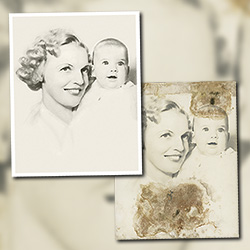
 When an an over confident amateur attempts to repair an old damaged photograph or a fragile historical object with household products such as instant glue or clear tape, the results can be disastrous. Such materials may stain the photograph, leave permanent residues and birn marks, introduce stresses into fragile surfaces, and make future professional restoration significantly more difficult if not impossible. A treasured family photograph or a historical artifact, that has survived for generations can potentially suffer irreversible damage from such attempts of repair.
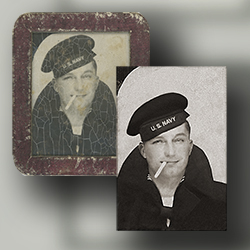
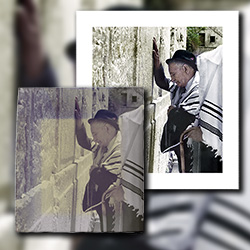
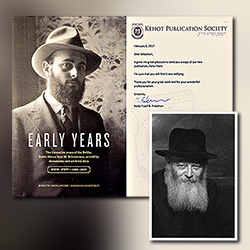
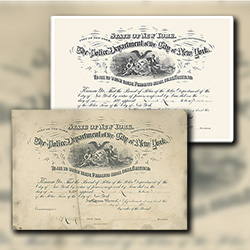
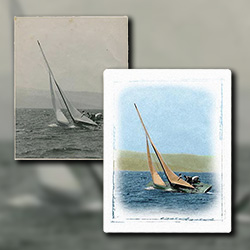
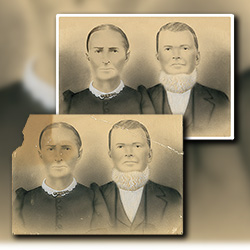
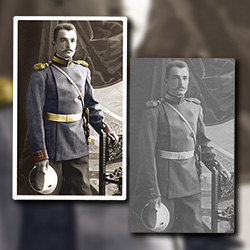
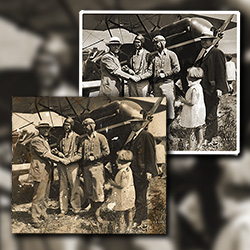
When the original object is too fragile or severely deteriorated to be safely restored, or when large portions of the photographic image are missing, an alternative approach may be to create a high-quality reproduction. This process begins with carefully documenting and, when possible, scanning or photographing the surviving image at high resolution. The damaged photograph can then be digitally restored, with missing details reconstructed based on the remaining visual information. The restored image can be printed on high-quality, archival photographic media, creating a durable reproduction that is far less vulnerable to the cracking, physical deterioration, and structural problems affecting the original.
Although a reproduction can never replace the historical and emotional value of the original photo medallion, it can provide a practical way to preserve the appearance and memory of an irreplaceable family photograph. In some cases, the original can be carefully preserved as an artifact while the restored reproduction is displayed and enjoyed by future generations.
|
|
|
|
|
|
|
|
|
|
|
|
|
|
|
|
|
|
|
|
|
|
|
|
|
|
|
|
|
|
|
|
|
|
|
|
|
|
|
|
|
|
|
|
|
|
|||||||||
| © 2026 Preserve Your Past | |||||||||
| By accessing this website you signify that you read, understood, and agreed to be bound by Terms of Services. If you do not agree to these terms, you are not permitted to use the Services. These Terms of Services have the same force and effect as an agreement in writing. |
|||||||||


