RESTORATION, PRESERVATION & ARCHIVING
MENU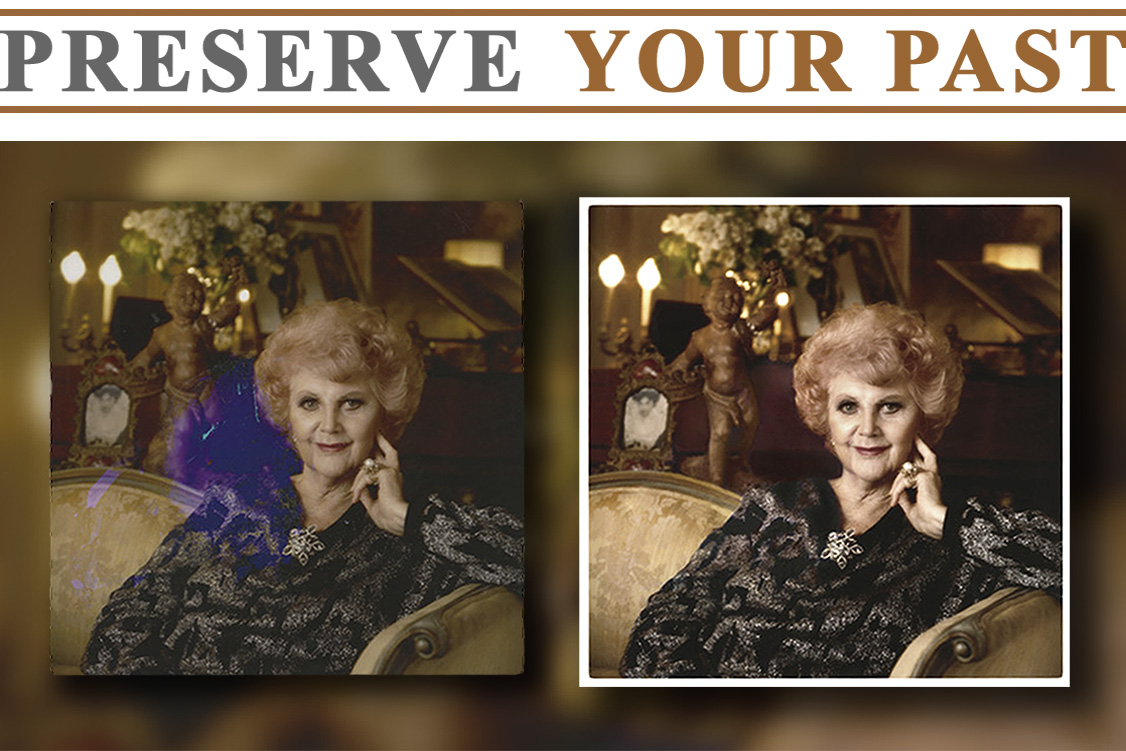
Restoration of a Photograph Damaged by Careless Cleaning
Photographs are surprisingly vulnerable to chemicals found in everyday household cleaning products. A moment of carelessness, a spray bottle aimed in the wrong direction or a cleaning solution settling onto a nearby photograph, can cause permanent damage to the delicate photographic surface.
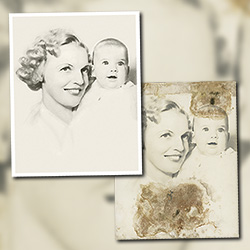
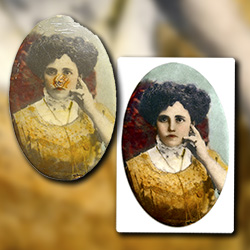
This beautiful portrait of Stella Adler, one of the most influential acting teachers of the 20th century, is a striking example of what can happen when household cleaning products come into contact with a photograph.
Adler was a legendary actress and acting teacher whose influence extended far beyond the stage. As a teacher, she helped shape generations of actors through her influential approach to acting and her emphasis on imagination, truthfulness, and the circumstances of a character. Her legacy continues through the Stella Adler Studio of Acting in New York.
Unfortunately, this beautiful portrait suffered an unfortunate accident. A household cleaning solution, intended for cleaning dusty furniture and dirty windows, was accidentally sprayed onto the surface of the photograph. The chemicals reacted with the photographic emulsion, leaving an ugly stain and noticeable discoloration across the image.
The damage was not simply a matter of surface dirt that could be wiped away. Photographic prints contain delicate image-forming materials that can be affected by moisture and chemicals. Attempting to clean such damage with additional household products could potentially make the situation considerably worse.
The first priority was to prevent the cleaning chemicals from continuing to affect the photograph. The print was carefully treated and washed using an appropriate conservation solution designed to help remove the chemical residue and any remaining contaminants from the surface.
This stage required particular care. The goal was not simply to make the photograph look cleaner, but to stabilize the print and remove as much of the harmful residue as possible without causing additional damage to the photographic image.
Once the cleaning process was completed, the photograph was carefully dried and prepared for the next stage of the restoration.
After the photograph had been cleaned and stabilized, it was scanned at high resolution to create a detailed digital master file. This provided the opportunity to work on the damaged areas without repeatedly handling the original print.
The digital image was then brought into a professional photo-editing environment for restoration. The area affected by the chemical stain was carefully retouched, reconstructing the appearance of the image and eliminating visible traces of the damage.
Digital restoration of a photograph such as this requires more than simply removing a discolored area. Every correction must take into consideration the surrounding tones, textures, details, and photographic characteristics of the original image. The goal is to make the restoration virtually invisible while retaining the character and authenticity of the original photograph.
In addition to removing the visible damage, the photograph required careful color correction. The chemical exposure had affected the appearance of the image, and the restoration needed to preserve the photograph's beautiful warm, golden tonal quality.
The color was carefully adjusted to create a natural and harmonious appearance while remaining faithful to the original photograph. Particular attention was paid to maintaining the warmth that gave the portrait much of its character and atmosphere.
The completed restoration was then printed, carefully framed, and returned to its rightful location at the Stella Adler Studio of Acting in New York, where the portrait could once again be displayed and appreciated.
This restoration is a valuable reminder that photographs should never be cleaned with household chemicals or ordinary glass and surface cleaners. Even a product that is perfectly safe for furniture, windows, or other household surfaces can cause irreversible damage when it comes into contact with a photographic print.
When a valuable or historic photograph becomes dirty, stained, or contaminated, the safest approach is to consult a professional photo restoration and preservation specialist before attempting to clean it yourself. What may appear to be a simple cleaning job can quickly turn into permanent damage, and, in some cases, the loss of an irreplaceable piece of personal or cultural history.
|
|
|
|

|

|
|
|
|
|
|
|
|
|
|
|
|
|
|
|
|
|
|
|
|
|
|
|
|
|
|
|
|
|
|
|
|
|
|
|
|
|
|
|
|
|
|||||||||
| © 2026 Preserve Your Past | |||||||||
| By accessing this website you signify that you read, understood, and agreed to be bound by Terms of Services. If you do not agree to these terms, you are not permitted to use the Services. These Terms of Services have the same force and effect as an agreement in writing. |
|||||||||


