RESTORATION, PRESERVATION & ARCHIVING
MENU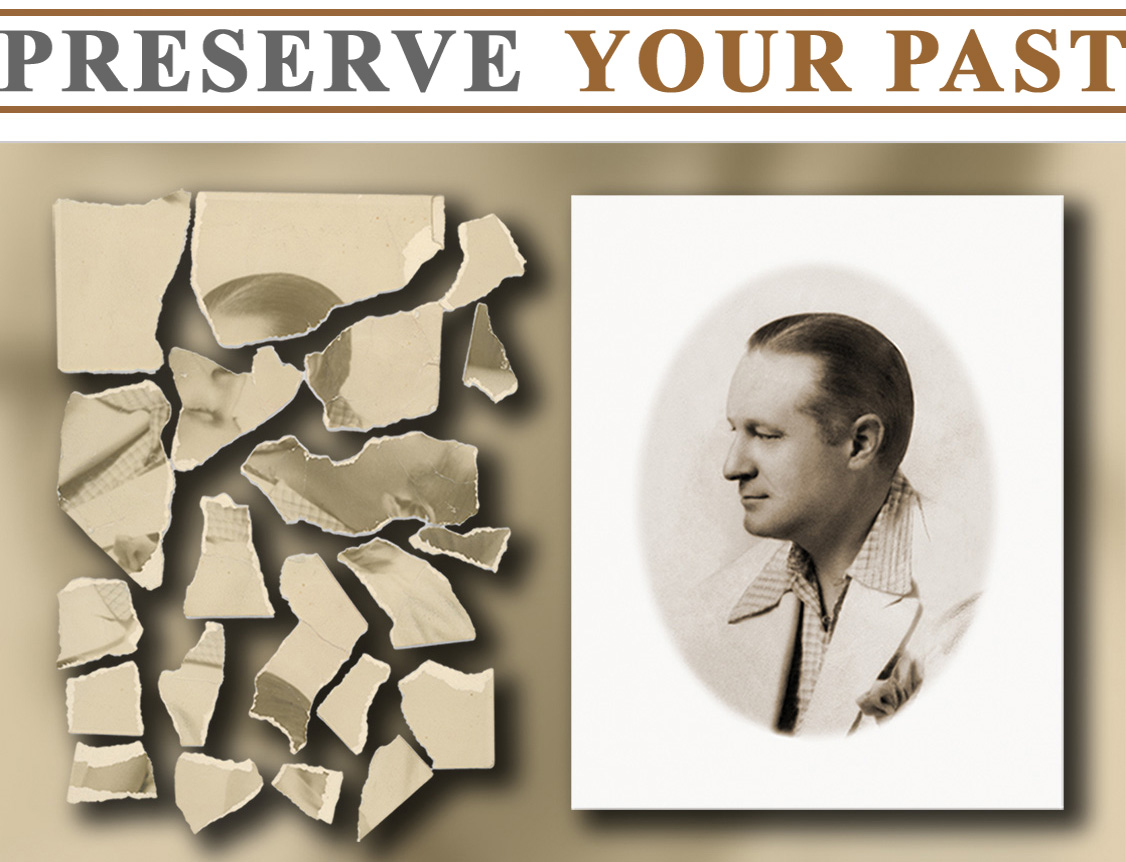
Restoration of a Torn Photograph
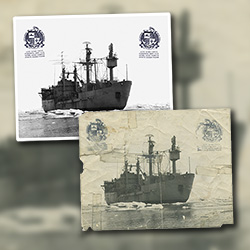
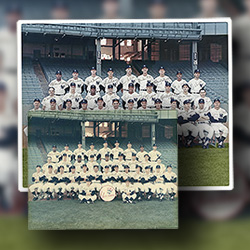
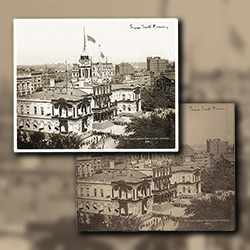
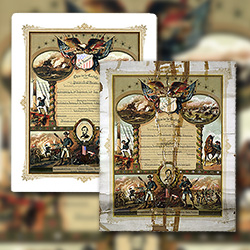
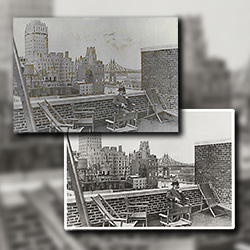
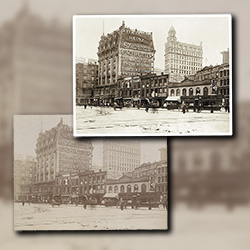
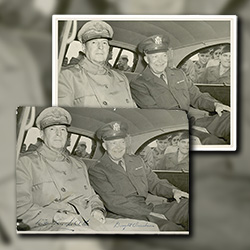
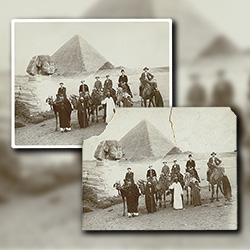
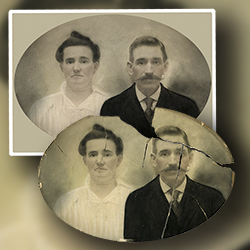
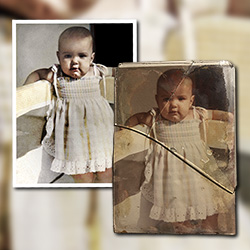
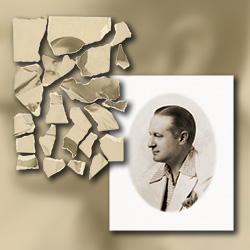
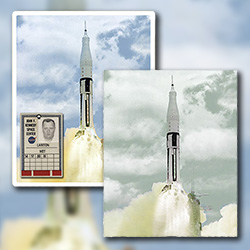
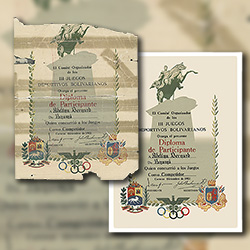
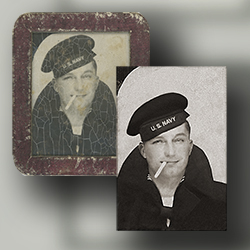
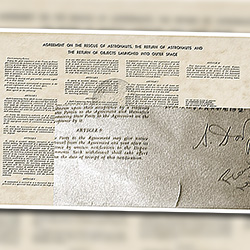
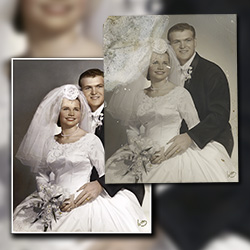
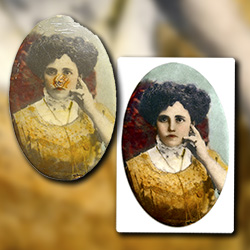
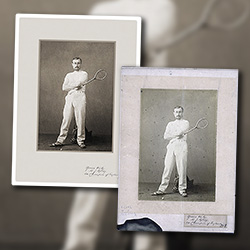
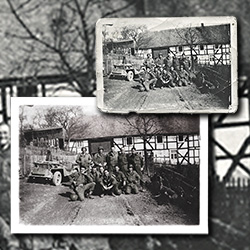
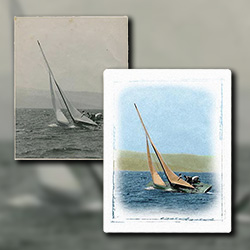
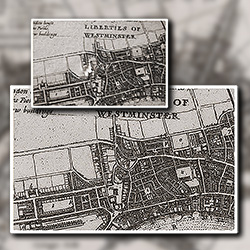
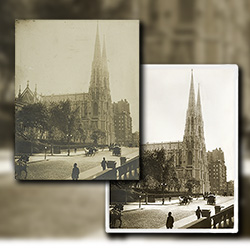
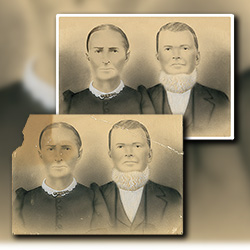
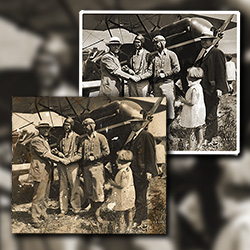
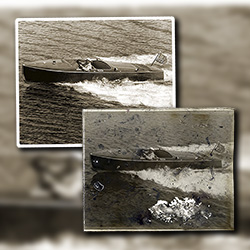
This severely damaged photograph had been torn into numerous fragments, leaving the original image broken into a complex puzzle of photographic pieces. The restoration began with carefully examining and reassembling each fragment, followed by securing the photograph with archival-quality conservation materials. Once stabilized, the reassembled photograph was scanned at high resolution and digitally restored. Tears, missing areas, cracks, stains, scratches, and other damage were meticulously retouched, reconstructing lost portions of the image while preserving the character and historical integrity of the original photograph. The restored image was then prepared for archival-quality printing, creating a new photograph that could once again be displayed, shared, and preserved for future generations.
Photographs are among the most meaningful objects that families preserve. They document people, places, and moments that can never be recreated, which is why the damage or destruction of an old photograph can be particularly heartbreaking. A photograph may be torn accidentally, damaged during a move, folded and broken through years of handling, or separated into pieces after being stored in poor conditions.
Fortunately, severe physical damage does not always mean that a photograph is beyond saving. With careful conservation and digital restoration, even a photograph that has been torn into numerous pieces can often be reconstructed and brought remarkably close to its original appearance.
The restoration of a torn photograph begins with the careful assembly of what is essentially a complex photographic jigsaw puzzle. Each fragment must first be examined individually. The shape of the torn edges, the direction of the photographic emulsion, the details visible in the image, and even subtle patterns in the paper can all provide clues about where each piece belongs.
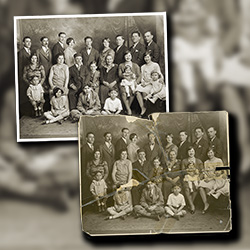 Unlike a conventional puzzle, damaged photographs rarely have clean, clearly defined edges. Some fragments may be curled, distorted, partially missing, or weakened by age. Others may have suffered additional damage after the photograph was torn. As a result, every piece must be handled with great care and positioned with precision.
The torn edges are painstakingly fitted together to minimize gaps and maintain continuity throughout the image. When the correct placement of each fragment has been determined, the pieces can be carefully stabilized using appropriate archival conservation methods and materials. The objective is to hold the photograph together securely while minimizing additional stress to the original photographic material.
Once all available fragments have been correctly reassembled, the photograph may be mounted to a suitable conservation-grade support to help prevent the pieces from shifting, separating, or becoming further distorted. The precise treatment depends on the condition and construction of the original photograph, as different photographic processes and paper types require different approaches. At this stage, the physical restoration provides a stable foundation for the next phase of the work: high-resolution digital capture.
After the photograph has been carefully stabilized, a high-resolution digital scan is created to capture as much information as possible from the original. The digital file becomes the working master for the restoration process, allowing delicate corrections to be performed without repeatedly handling the fragile original photograph.
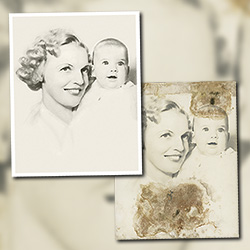
The digital restoration process can be as meticulous as the physical reconstruction. Tears, cracks, missing sections, stains, scratches, abrasions, discoloration, and other imperfections are carefully repaired using specialized image-editing techniques.
The most challenging aspect is often reconstructing areas where photographic information has been completely lost. When portions of a face, article of clothing, architectural detail, or background are missing, the restoration artist must carefully study the surrounding image to determine what may have originally been present.
Missing details can sometimes be reconstructed by referencing adjacent patterns, textures, shapes, and tonal values. In other cases, the restoration requires a more interpretive approach. The goal is to create a seamless visual reconstruction while avoiding unnecessary invention or alteration of historically significant details.
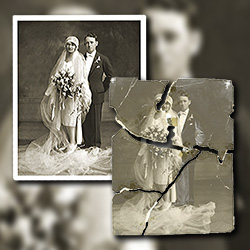 This distinction is especially important when restoring old family photographs and historical images. A successful restoration should respect the original photograph rather than transform it into something that never existed. The objective is not simply to create a beautiful new image, but to restore the photograph as faithfully as possible to the way it originally appeared.
Torn photographs frequently have other forms of damage as well. Years of exposure to light, fluctuations in temperature and humidity, improper storage, or contact with unsuitable materials can cause photographs to fade, yellow, stain, or develop uneven discoloration.
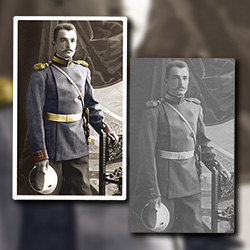
When appropriate, additional digital enhancements may be applied during restoration. These can include tonal correction, contrast adjustment, color balancing, and the careful recovery of faded details. In some cases, digital colorization may also be considered when requested by the client or when it is appropriate to the project.
Any such enhancement should be approached carefully. Restoration is fundamentally different from alteration. While modern technology makes it possible to dramatically change an old photograph, the purpose of professional restoration is generally to preserve and recover the information contained within the original image rather than unnecessarily change its character.
For historically important photographs, maintaining an accurate record of the original appearance is particularly valuable. For family photographs, the priority may also include recovering the emotional and visual qualities that make the image meaningful to future generations.
Once the digital restoration is complete, the restored image can be prepared for reproduction. A new archival-quality print may be produced on carefully selected fine art or photographic paper, depending on the desired appearance and the nature of the original photograph.
The paper and printing method can be chosen to complement the texture, surface finish, tonal range, and character of the original image. In some cases, the goal is to create a reproduction that closely resembles the original photograph. In others, a fine art print may be produced as a new archival object while the original, fragile photograph is preserved separately.
This approach has an important practical advantage: the restored digital master can be used to create additional copies in the future. Family members can receive reproductions, while the original photograph and the restored master file can remain safely preserved.
The restoration of a severely torn photograph is more than a technical exercise. Behind every damaged image is a story, a family, or a moment that someone considered important enough to preserve. A photograph that once appeared to be beyond repair can, through careful physical reconstruction and meticulous digital restoration, become a meaningful family heirloom once again. Although some damage may be irreversible and missing information cannot always be recovered, even a photograph composed of many torn fragments can often be given a new life.
The final result is not simply a repaired picture. It is the preservation of a visual connection to the past, a photograph that can once again be viewed, displayed, and shared with children, grandchildren, and future generations. When an original photograph is irreplaceable, professional restoration offers the opportunity to preserve what remains, recover what has been damaged, and ensure that the memory captured in the photograph is not lost simply because the physical object has suffered the passage of time.
|
|
|
|

|
|
|
|
|
|
|
|
|
|
|
|
|
|
|
|
|
|
|
|
|
|
|
|
|
|

|
|
|
|
|
|
|
|
|
|
|
|
|
|
|
|
|||||||||
| © 2026 Preserve Your Past | |||||||||
| By accessing this website you signify that you read, understood, and agreed to be bound by Terms of Services. If you do not agree to these terms, you are not permitted to use the Services. These Terms of Services have the same force and effect as an agreement in writing. |
|||||||||


