RESTORATION, PRESERVATION & ARCHIVING
MENU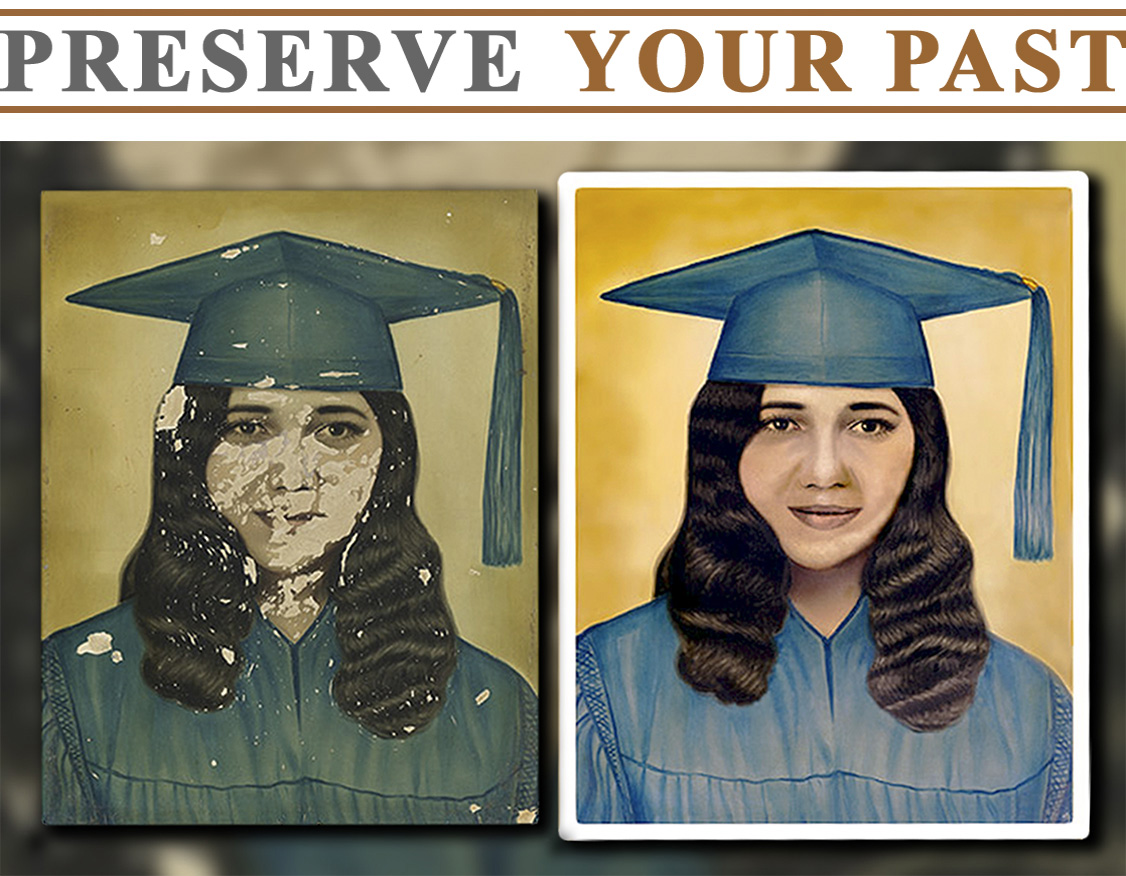
RESTORATION OF A HAND-PAINTED GRADUATION PORTRAIT
Long before digital photography and sophisticated photo-editing software, creating a richly colored and expressive photographic portrait often required the skill and patience of a talented artist. Known as retratos pintados, literally, “painted portraits”, these hybrid works combined the precision of photography with the artistry of hand-applied color and paint. The photographic image provided the foundation, while an artist carefully applied pigments to enhance the sitter's features, clothing, and surroundings, transforming a monochrome photograph into a unique, handcrafted work of art.
Hand-colored and hand-painted photographs became particularly popular during the nineteenth and early twentieth centuries, when photography was still evolving and color photography was not yet commercially practical. Artists and photographers used a variety of materials, including watercolor, pigments, pastels, and oil paints, to add color and dimension to photographic images. The practice was especially common in portraiture, where applied color could make a photograph appear more lifelike while also introducing an element of artistic interpretation. The Metropolitan Museum of Art notes that hand-painted photographic portraits became fixtures in American middle-class interiors from the late 1850s into the early twentieth century, valued for combining photographic likeness with the flattering qualities traditionally associated with painted portraiture.
These portraits were often treasured as family heirlooms, preserving the likenesses of loved ones at a time when a formal portrait remained an important part of family life and personal history. Each was unique, reflecting not only the appearance of the sitter but also the individual decisions and craftsmanship of the artist who applied the color. Today, these remarkable objects offer a fascinating glimpse into the history of photography and portraiture, occupying a space between photographic document and painted artwork.
Restoring a damaged retrato pintado presents a particular challenge because two distinct artistic layers must be considered: the original photographic image and the delicate traces of the artist's hand. Damage to the painted surface can obscure facial features, alter the original colors, and disrupt the relationship between the photographic image and the painted additions. Any restoration must therefore balance the preservation of the original photograph with the need to recover the visual integrity of the portrait.
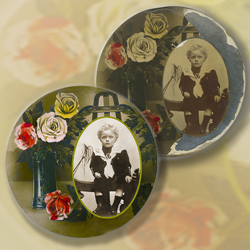
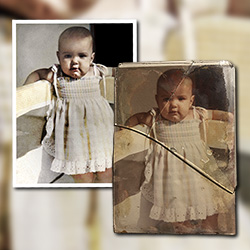
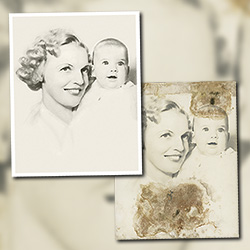
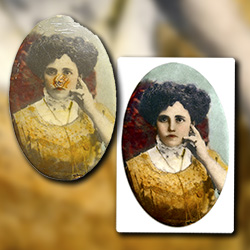
This graduation portrait had suffered extensive damage, including significant flaking and loss of both the photographic emulsion and the hand-applied oil paint. The deterioration was particularly severe in the sitter's face, where missing areas had compromised important details of the original likeness.
The client needed the portrait restored quickly in time for an anniversary and also wanted multiple copies to be made available to family members. Rather than attempting to restore the fragile original photograph by applying new layers of oil paint, the decision was made to restore the image digitally. This approach allowed the original object to remain untouched while providing a highly detailed reconstruction of the damaged areas and making it possible to produce multiple high-quality copies for the family.
The digital restoration also offered an opportunity to recover and carefully balance the portrait's original color relationships. Areas where the hand-applied paint had flaked away were digitally reconstructed, while the remaining color was carefully matched to create a cohesive and natural appearance without losing the character of the original hand-painted work.
Reconstructing the missing portions of the sitter's face presented the greatest challenge. Fortunately, family members were able to provide additional photographs of the subject. These reference images served as valuable visual evidence, allowing the missing facial features to be reconstructed with greater accuracy while preserving the distinctive likeness of the individual.
The completed restoration brought the damaged graduation portrait back to life, preserving the historical character of the original retrato pintado while creating a durable digital master that could be reproduced and shared with future generations. In this case, digital restoration provided a practical and sensitive solution: the fragile original remained preserved, while the restored image could once again be enjoyed as a complete portrait and family keepsake.
|
|
|
|

|

|
|
|
|
|
|
|
|
|
|
|
|
|
|
|
|
|
|
|
|
|
|
|
|
|
|
|
|
|
|
|
|
|
|
|
|
|
|
|

|
|
|||||||||
| © 2026 Preserve Your Past | |||||||||
| By accessing this website you signify that you read, understood, and agreed to be bound by Terms of Services. If you do not agree to these terms, you are not permitted to use the Services. These Terms of Services have the same force and effect as an agreement in writing. |
|||||||||


